If you’ve been paying any attention at all to the tectonic plates shifting beneath the gaming industry lately, you’ve probably noticed that the old, rigid borders between “Eastern” and “Western” development aren’t just blurring—they’ve basically been vaporized. It’s a fascinating time to be watching the business side of things, and according to the latest updates hitting the Eurogamer.net feed, we’ve just witnessed the most definitive proof of this trend to date. Patrick Söderlund—the visionary who essentially defined the modern Battlefield era and later went on to found Embark Studios—has been named the new Executive Chairman of Nexon. Honestly? This doesn’t feel like just another corporate reshuffle or a simple promotion. It feels like a massive, high-stakes declaration of war against the traditional global gaming hierarchy.
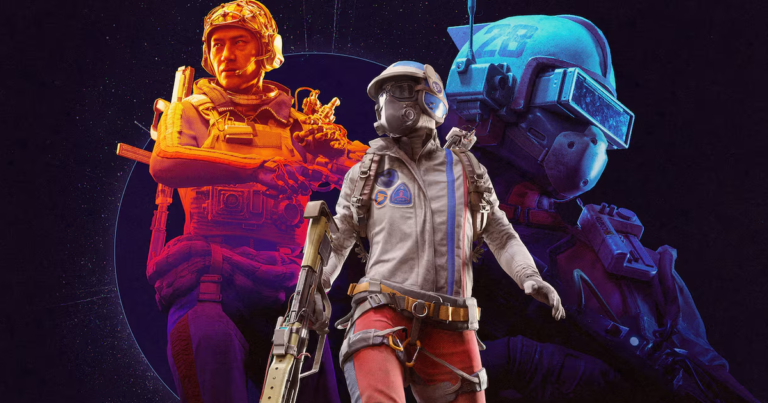
For those of us who spent years following Söderlund’s trajectory through the halls of DICE and EA, this move feels like the logical, if highly ambitious, endgame of a very long and very calculated game of corporate chess. He’s stepping into this new role while riding the wave of a massive, world-beating success with Arc Raiders. That game hasn’t just been “present” in the conversation; it has spent the last several months absolutely dominating the extraction shooter niche across PC, PS5, and the Xbox Series X/S. Now, he’s moving into a position where he’ll be steering the entire “strategic direction” for the multi-billion dollar entity that is Nexon, working side-by-side with CEO Junghun Lee. It’s a massive, meaty role, and if we’re being completely honest, it’s exactly the kind of shake-up Nexon needs if they ever want to shed the “MapleStory company” label and be recognized as a true, top-tier global powerhouse.
Can One Man Really Rebrand a Multi-Billion Dollar Behemoth?
Let’s get real for a second: Nexon has never had a “money” problem. They’ve had the cash, the infrastructure, and the server capacity for decades. What they’ve lacked, however, is a cohesive creative identity that actually means something to a player sitting in Los Angeles, Paris, or London. For a long time, Nexon was the undisputed king of the “live service” model before the industry even had a name for it. They were fueled by the seemingly eternal engines of MapleStory and Dungeon & Fighter, games that printed money but felt culturally isolated from the Western AAA space. But those titles, as successful as they are, feel like relics of a different era of gaming. To really win in the 2026 landscape, a publisher needs more than just a dedicated group of “whales” keeping the lights on; they need genuine, undeniable cultural relevance.
Söderlund brings that relevance in spades. When he walked away from the security of EA to start Embark Studios, plenty of industry insiders thought he was losing his mind. Why leave the safety of a massive publisher to start from scratch? Well, look where we are now. The Finals proved that his team could innovate on things like destruction physics and environmental interaction in a way that made the rest of the industry—including his former colleagues—look a bit stagnant. And then came Arc Raiders. That game didn’t just have a successful launch; it absolutely exploded onto the scene. Seeing it peak at nearly 1 million concurrent players on PC alone recently was a massive “I told you so” moment for anyone who had doubted the Embark formula. By handing him the Chairman’s seat, Nexon isn’t just bringing on a consultant; they’re buying his “cool factor” and his proven ability to capture the zeitgeist.
It’s worth looking at the broader context here, too. A 2024 Statista report pointed out that the global video game market was on track to soar past $282 billion by the end of that year, with a massive chunk of that revenue shifting toward high-fidelity, cross-platform live services. Nexon clearly saw the writing on the wall. They understood that to capture that specific slice of the pie, they needed a leader who speaks the language of the Western “hardcore” gamer but also possesses a deep, native understanding of the ruthless efficiency found within a Korean corporate giant. It’s a rare combination of skills.
“Nexon has all the assets to unleash dramatic growth – incredibly talented people, iconic franchises, large and committed player communities, and best-in-class live service capabilities. This is an enormous opportunity, but one that will require deep focus and discipline.”
— Patrick Söderlund, Executive Chairman of Nexon
The Long Walk from “Casual” Mobile King to Hardcore Credibility
It’s been fascinating—and, at times, a little surprising—to watch Nexon’s trajectory over the last few years. For the longest time, they were perfectly content “bobbing along,” as some critics might put it, raking in billions from mobile titles and regional hits. But then 2023 changed everything. They took a chance on Dave the Diver through their Mintrocket subsidiary, and suddenly, the “hardcore” crowd—the exact people who usually roll their eyes at mobile-first publishers—were completely obsessed. It was a charming, pixel-art roguelike that felt personal and handcrafted, and it worked flawlessly on the Nintendo Switch and PC. More importantly, it fundamentally shifted the narrative around what a “Nexon game” could actually be.
That momentum didn’t stop there. We saw the release of The Finals, and more recently, The First Descendant. Now, let’s be fair: The First Descendant was a bit of a mixed bag. If we’re being kind, we could call it “middling,” but even so, it proved that Nexon was finally willing to swing for the fences in the high-budget looter-shooter genre. But Arc Raiders? That was the real turning point. It was the game that proved Embark (and, by extension, Nexon) could handle the immense technical and community-driven demands of a massive live-service environment. Even when things got messy—like the recent “duplication glitch” drama where players were doubling their loot like some kind of digital Robin Hood—the team handled it with a level of transparency and speed that you just didn’t see from the “old-school” Nexon of ten years ago.
Söderlund’s official appointment is really the final piece of this multi-year puzzle. It signals to the world that the “Mintrocket approach”—which prioritizes creative freedom and high-quality, polished gameplay over immediate monetization—is no longer just a fun side project for the company. It’s the new blueprint for everything they do. He isn’t just there to keep an eye on Embark anymore; he’s there to ensure that every single studio under the Nexon umbrella starts thinking with that same disruptive, “player-first” mindset.
The Weird Power Dynamics of a Creative Executive
One of the most interesting details in this whole announcement is the specific phrasing of the roles. Söderlund is set to define the “strategic direction,” while CEO Junghun Lee is tasked with “implementing” it. In the world of corporate double-speak, that is an incredible amount of power to hand to one person. It suggests a dynamic where Söderlund is the visionary—the guy standing at the base of the mountain pointing toward the summit—and Lee is the one making sure the oxygen tanks are full and the climbing gear is ready. It’s a partnership that actually reminds me of some of the most successful pairings in tech history, where a restless creative mind is paired with a brilliant operational mastermind.
But the big question on everyone’s mind is: does this mean Söderlund is stepping away from the day-to-day grind at Embark? The reports suggest he’s actually keeping that “meaty role” as CEO of Embark while taking on these new Chairman duties. Honestly, I have no idea how the man finds time to sleep. Between managing the constant stream of events and updates for Arc Raiders (which, by the way, are already mapped out through April) and steering a multi-billion dollar corporation, his plate isn’t just full—it’s overflowing. But then again, maybe that’s the secret sauce. Söderlund has always been a “get your hands dirty” kind of developer. He seems to thrive on the specific kind of chaos that comes with active game development.
And we really shouldn’t overlook the technical side of this equation. Embark has been incredibly vocal about their use of AI-assisted and procedural tools to streamline the development process. In an era where AAA game budgets are ballooning toward the $300 million mark and dev cycles are stretching into infinity, Söderlund’s obsession with “efficiency through technology” is likely music to the ears of Nexon’s investors. According to a 2025 industry analysis by Newzoo, the average development time for a major AAA title has crept up to nearly six years. If Söderlund can take the Embark tech stack and use it to shave a year or two off that timeline without sacrificing quality, he’ll instantly become the most valuable person in the entire gaming industry.
What Does This Actually Mean for the Person Holding the Controller?
So, let’s bring it down to earth: what does this mean for you, the person actually playing these games on your PS5, Xbox, or PC? For starters, you should probably expect a lot more “Western-style” sensibilities coming out of Nexon’s Korean studios. We’re likely going to see a continued shift away from the aggressive, “pay-to-win” monetization models that defined their older catalog. Instead, they’ll likely lean into the “battle pass and cosmetics” model that has worked so effectively for The Finals and Arc Raiders. It’s a move toward sustainability and player goodwill, which is always a win in my book.
We’re also probably going to see a lot more cross-pollination between their various studios. Imagine a world where the world-class destruction tech behind Arc Raiders is used to breathe new life into a classic Nexon IP. A high-fidelity, physics-heavy MapleStory? Okay, that might be a bit of a stretch, but you get the point. The walls are coming down. Söderlund is, at his core, a “gameplay first” guy. He’s the kind of developer who gets obsessed with the weight of a jump, the sound of a reload, and how the world reacts when a grenade goes off. Having that kind of influence at the very top of Nexon can only be a good thing for the sheer quality of their future games.
There’s also the very real issue of “live service fatigue” to consider. We’ve seen so many high-profile games crash and burn lately because they tried to be “the next big thing” without actually having a soul or a reason to exist. Söderlund seems to understand better than most that you can’t just build a “platform” and hope people show up; you have to build a great game first. Arc Raiders didn’t succeed because it had a great spreadsheet of monetization goals; it succeeded because it was a tight, atmospheric, and rewarding shooter. If he can bake that philosophy into the rest of Nexon’s massive pipeline, we might actually be entering a bit of a golden age for the publisher.
The Road Ahead and the Hurdles in the Way
Of course, I’m not saying it’s all going to be smooth sailing from here. Leading a company the size of Nexon requires a very different kind of “discipline” than leading a scrappy, innovative startup like Embark. There will be internal politics to navigate, legacy systems that don’t want to change, and the unrelenting pressure of quarterly earnings calls. And as we saw with that duplication exploit in Arc Raiders, even the most brilliant plans can be momentarily derailed by a few “cheeky players” who find a loophole in the code. Corporate culture doesn’t change overnight, even with a visionary at the helm.
But if anyone is equipped to handle that pressure, it’s Söderlund. He’s been in the trenches for decades. He’s seen the incredible highs of the Battlefield 3 era and he’s endured the… let’s call them “learning experiences” of his later years at EA. He’s entering this role with his eyes wide open and a track record that really speaks for itself. This “next phase of growth” for Nexon isn’t just about finding new ways to make money; it’s about claiming a permanent seat at the table with the world’s most respected and innovative developers. And honestly? With Söderlund leading the charge, I wouldn’t be at all surprised if they actually pull it off.
Will Patrick Söderlund still be involved with Embark Studios?
Yes, and that’s one of the most impressive parts of this. He’s staying on as the CEO of Embark Studios even as he takes the reins as Executive Chairman at Nexon. He’ll be pulling double duty, balancing the high-level strategy of the parent company with the creative, day-to-day output of the studio he built from the ground up.
What platforms are Nexon’s current big hits on?
They are leaning heavily into the cross-platform future. Major hits like Arc Raiders and The Finals are available on PC, PlayStation 5, and Xbox Series X/S. Meanwhile, their more experimental or “cozy” hits, like Dave the Diver, have found a massive audience on the Nintendo Switch as well as PC.
Why is this appointment such a big deal for the industry?
It’s a massive “vibe shift” for the industry. You don’t often see a traditional Asian gaming giant put a Western creative lead in charge of their entire global strategy. It’s a clear signal that the future of the company is in high-end, multi-platform AAA development, moving away from the mobile-first strategies that dominated the last decade.
In the end, this is much more than a simple personnel change or a new name on an office door. It’s a fundamental shift in how one of the biggest players in the industry views itself. Nexon is no longer content to be the “silent giant” of the East, making billions in the background. They want to be the loudest, most innovative voice in the room, and they’ve just hired the best megaphone in the business to make sure the world is listening.
This article is sourced from various news outlets, including reports from Eurogamer.net. The analysis and presentation here represent our editorial perspective on the rapidly shifting landscape of the gaming industry as of February 2026.
About the Author