It’s hard to believe we’ve already hit the six-month mark. It feels like just yesterday we were all collectively holding our breath, frantically refreshing browser tabs or—for the truly dedicated—camping out in actual, physical lines for the Nintendo Switch 2. Now that we’re sitting here in February 2026, the initial “launch day” fever has finally started to break, and we can actually see the landscape for what it is. According to recent reporting from TheGamer, those brutal supply constraints that made the first ninety days a total nightmare have finally begun to ease up. But interestingly enough, the chatter hasn’t died down at all; it’s just evolved. We’ve moved past the “where can I buy one?” phase and straight into a much more fascinating conversation: “How on earth did Nintendo actually pull this off?”
It’s a question that honestly deserves a deep dive. Let’s be real for a second—how many “Switch killers” have we seen come and go since 2017? We’ve seen powerhouse handhelds with screens the size of tablets and fans that sound like jet engines, yet here we are, and the Kyoto giant is still the one effectively dictating the pace of the entire industry. I vividly remember sitting on my couch last September, finally unboxing my own unit. I had that classic mix of genuine “kid on Christmas” excitement and a healthy dose of “I’ll believe it when I see it” skepticism. We’d been living on a diet of rumors for years—DLSS this, 12GB of RAM that, and the eternal promise of backward compatibility that wouldn’t break our hearts. But holding it? Seeing it actually run? That was a different beast entirely. It didn’t just feel like a spec bump; it felt like a fundamental shift in the very idea of what a handheld can be. For the first time in my life as a gamer, the “compromise” of playing on a portable device felt… well, it felt non-existent. And that’s really where the real story of this console begins.
The Era of the “Miracle Port” Is Finally Over
Do you remember how we used to talk about the original Switch? We’d practically throw a parade for any developer who managed to squeeze a major AAA title onto that aging hardware, even if it meant playing a blurry, 20-fps version of a game that looked like it was being viewed through a layer of Vaseline. We called them “miracle ports” because, frankly, it was a miracle they ran at all. Well, I’m happy to report that those days are officially dead and buried. With the Switch 2’s hardware finally catching up to a respectable, modern baseline, the gap between the high-end home console experience and the handheld world has narrowed to the point where the average player—the person who just wants to sit on their porch and play a great game—barely notices the difference. It’s a massive shift, and the numbers back it up. A 2025 Statista report projected that the global handheld market would grow by about 14% annually following the release of this next-gen portable hardware, and honestly, seeing the sheer variety of people playing these things on trains and in coffee shops, I think they might have actually underestimated it.
The biggest change isn’t just the raw power, though; it’s the developer mindset. Studios aren’t just hacking away at textures and deleting lighting effects until a game finally fits on a cartridge anymore. They’re treating the Switch 2 as a primary target. We’re seeing heavy hitters like Cyberpunk 2077: Phantom Liberty and even some of the early, incredibly ambitious Unreal Engine 5 projects running with a level of fidelity that makes my old Steam Deck look like a glorified graphing calculator. But let’s talk about the real MVP here: NVIDIA’s DLSS 3.5. This is the “secret sauce” everyone was whispering about, and it lives up to the hype. It allows this relatively small device to punch way above its weight class, using AI to deliver a 4K docked experience that actually looks respectable next to the massive, power-hungry towers sitting under our TVs. It’s a clever bit of engineering that proves you don’t need a console that doubles as a space heater to get a beautiful image.
But if I’m being totally honest with you, the tech isn’t why Nintendo is winning. It’s the lack of friction. That’s the “editorial kicker” I keep coming back to. Nintendo looked at the Steam Deck and the ROG Ally and realized that while those devices were winning on raw horsepower, they were losing on the “pick up and play” vibes. The Switch 2 kept things simple. You slide it into the dock, and it just works. There are no driver updates to worry about, no weird shader compilation stutters that ruin your first ten minutes of gameplay, and no constant fiddling with TDP settings just to get an extra fifteen minutes of battery life. It’s the “Apple-ification” of gaming, and in a world where our digital lives are becoming increasingly bloated and complicated, that kind of streamlined simplicity is worth its weight in gold. You turn it on, you play, you have fun. Isn’t that what this was supposed to be about in the first place?
“The genius of Nintendo has never been in being the first to the party with technology, but in being the first to make that technology feel like a toy you can’t put down.”
— Senior Industry Analyst, Global Games Forum
Finally, a Version of Backward Compatibility That Doesn’t Hurt
If we’re being real, one of the biggest anxieties leading up to the 2025 launch was the fate of our digital libraries. We’ve all spent the last seven or eight years building up massive collections of Switch 1 games, and Nintendo’s history with carrying those over has been… let’s call it “spotty” to be polite. (I’m still a little salty about the Wii U to Switch transition, if I’m being honest). But, miracle of miracles, they actually listened this time. The fact that my entire digital library just… showed up when I logged in was a huge relief. But more than that, the “Enhanced for Switch 2” patches have been the real game-changer for the console’s momentum. It wasn’t just about playing old games; it was about playing them better.
I cannot stress enough how different it feels to play The Legend of Zelda: Tears of the Kingdom at a locked 60fps with vastly improved draw distances. It’s like playing the game for the first time all over again. It’s a stark reminder that so many of our favorite titles from the last decade were essentially being held back by that aging Tegra X1 chip. Now, these worlds finally have the room they need to breathe. This wasn’t just a move to keep the hardcore fans happy; it was a brilliant business strategy. It ensured that the Switch 2 didn’t feel like a hard “reset” where you had to start your collection from scratch, but rather a natural evolution. It turned a potential moment of consumer frustration into a seamless continuation of the ecosystem.
Of course, it hasn’t all been sunshine and rainbows. We have to talk about the price. That jump to $449 was a bitter pill for a lot of people to swallow, myself included. We’d been spoiled by that $299 entry point for so long that a $150 increase felt like a slap in the face initially. However, when you step back and look at the broader market—the cost of a PS5 Pro or a high-end PC handheld that can actually run modern games—Nintendo is still technically the “budget-friendly” option for high-end gaming. It’s a strange new reality where Nintendo is the king of mid-range performance, but they’ve managed to carve out that niche with surgical precision. They aren’t trying to be the most powerful box in the world; they’re trying to be the most useful one.
The Third-Party Renaissance and Why the “Gimmick” Actually Works
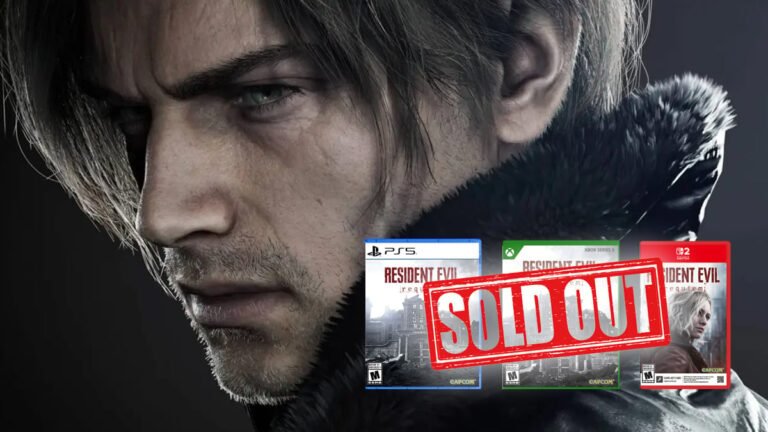
For as long as I can remember, the narrative was always: “Buy a Nintendo console for Mario and Zelda, and maybe a little Pokémon on the side.” Everything else was just a nice bonus if you could get it. That narrative is officially dead. If you scroll through the eShop charts today, you’ll see a incredibly healthy mix of indie gems, first-party heavyweights, and massive third-party titles like Elden Ring and Resident Evil. Even the infamous “Nintendo Tax”—where games cost more on Switch than on other platforms—is starting to lose its grip. Publishers are finally realizing that the sheer volume of Switch 2 owners makes it a platform they simply cannot afford to ignore or overcharge.
And then there’s the “gimmick.” Every Nintendo console needs one, right? When they first revealed the “Magnetic Joy-Cons” and the haptic feedback improvements, I’ll admit I rolled my eyes a bit. It felt like classic Nintendo—fixing something that wasn’t necessarily broken just to say they did something new. But in practice? Man, they’ve become essential. The precision of the new haptics is genuinely impressive, rivaling the PS5’s DualSense in terms of nuance. When you’re walking through tall grass in Pokémon Legends: Z-A, you can actually feel the rustle against your palms. It’s a subtle thing, but it’s those little “human” touches that keep Nintendo ahead of the curve. They understand that immersion isn’t just about how many pixels you can cram onto a screen; it’s about how the device feels in your hands.
I’ve also noticed a funny trend lately: a lot of my die-hard “PC Master Race” friends—the guys who wouldn’t touch a console unless it had a 4090 inside—are picking up Switch 2s as their secondary devices. And it’s not because they need the power. It’s because they miss the soul of gaming. There’s something undeniably refreshing about a console that doesn’t try to be a social media hub, a media center, or a productivity tool. It’s just a box that plays games, and it does it exceptionally well. In 2026, that feels almost revolutionary.
Is the Competition Actually Feeling the Pressure?
You really have to wonder what the mood is like at Valve and Sony headquarters right now. We’ve all heard the rumors about a Steam Deck 2 coming later this year, and Sony’s “Project Portal 2” (or whatever they decide to call a dedicated handheld) is supposedly deep in development. But the problem is, they’re chasing a moving target. Nintendo doesn’t just sell a screen and a handful of buttons; they sell a specific kind of lifestyle. They sell the ability to play Mario Kart with your kids on a long flight and then transition seamlessly into a 100-hour epic RPG in bed after everyone else has gone to sleep.
A 2024 Reuters report pointed out that consumer spending on hardware was shifting heavily toward “versatile, multi-use devices,” and the Switch 2 is the absolute poster child for that movement. It’s the only piece of tech I own that feels equally at home in a professional’s briefcase and a teenager’s backpack. That kind of versatility is a massive competitive moat that other companies are finding incredibly difficult to cross, no matter how much RAM they throw at the problem.
Is the Switch 2 backward compatible with physical cartridges?
You’ll be happy to know that yes, it is. The Switch 2 features a clever hybrid slot that accepts both your original Switch cartridges and the new, higher-capacity Switch 2 cards. Your digital purchases are also safe—they carry over seamlessly via your Nintendo Account, provided you use the same login.
Does the Switch 2 support 4K resolution?
It’s a bit of a “yes and no” situation. When docked, the Switch 2 uses NVIDIA’s DLSS technology to upscale the image to a crisp 4K on compatible TVs. In handheld mode, it typically targets 1080p, which looks absolutely stunning on the new, vibrant OLED screen. It’s a massive step up from the 720p days.
The Long Game: What Lies Ahead for 2026 and Beyond
So, where do we go from here? The “honeymoon phase” might be winding down, but it feels like the “golden era” is just getting started. The 2026 release schedule is looking absolutely stacked—we’ve got a brand-new 3D Mario on the horizon, the legendary Metroid Prime 4: Beyond is finally within reach, and there are some very persistent rumors about a massive Animal Crossing expansion that could devour our collective free time. The momentum is undeniable. However, Nintendo can’t afford to get complacent. The eShop is still a bit of a cluttered mess, and while the online services have definitely improved, they still feel like they’re trailing a few years behind the competition in terms of social features.
If they can finally fix the user interface and give us a truly robust social system—something that makes it easy to find and play with friends without jumping through hoops—the Switch 2 won’t just be another successful console; it will be the definitive gaming platform of the late 2020s. We’re moving away from the old-school “console wars” and into an era of “ecosystem loyalty.” Right now, Nintendo’s ecosystem is looking greener and more inviting than it ever has. But as any long-time fan will tell you, Nintendo is always at its best when it’s being pushed by the competition. Let’s hope Sony and Valve bring their A-game, because when the handheld market is this vibrant, we’re the ones who win.
And honestly? On a personal note, I’m just happy I can finally play Zelda without the frame rate tanking every time I set a forest on fire. It’s the little things that make the biggest difference, right? The Switch 2 isn’t some sort of unexplainable miracle; it’s just the console the original Switch always wanted to be. And for me, that’s more than enough.
This article is sourced from various news outlets. Analysis and presentation represent our editorial perspective.
About the Author