I’ve been spending a lot of time lately thinking about a question that doesn’t have a simple answer: how do we actually define “enough” when it comes to our favorite hobbies? We’re standing here in the early months of 2026, and if you take a second to look back at where the gaming industry has traveled over the last couple of years, it’s hard not to feel like we’ve finally hit a breaking point of franchise saturation. It’s everywhere. According to the latest reports from the Eurogamer.net feed, Ubisoft isn’t just leaning on its big names—it’s doubling down with a level of intensity that’s honestly a little breathless. They are betting the house on their two most massive pillars: Far Cry and Assassin’s Creed. On one hand, it’s the safest move a corporate entity could possibly make. On the other? It feels terrifyingly risky. It’s like watching a seasoned high-wire artist decide that the best way to maintain their balance in a high wind is to simply pick up two more pieces of heavy luggage. You want to cheer for the ambition, but you can’t help but wince at the physics of it all.
The news that hit the wire a while back about Ubisoft’s massive internal restructuring was supposed to signal the dawn of a brand-new era. We were told that by splitting the company into five distinct “creative houses,” things would finally be different. We’ve seen Vantage Studios—the big collaboration with Tencent—step into a massive leadership role within this new framework. Ubisoft’s CEO, Yves Guillemot, hasn’t been shy about the fact that this model is built for speed. It’s designed to get projects out the door and into our hands faster than ever before. But that leads me to the “enough” question: does anyone actually want these games to come out faster? We already know the Assassin’s Creed community has ballooned to over 30 million players, which is a staggering number by any metric. But with a release pipeline that currently looks like a high-pressure firehose, I’m starting to wonder if we’re actually being hydrated or if we’re just being drowned in content for the sake of quarterly earnings.
Can a Ticking Clock Save a Franchise That’s Been Running in Circles?
Let’s dig into the next mainline Far Cry, a project we’ve been tracking for a while under the codename Project Blackbird. For years, the Far Cry formula has felt like a very polished “map-clearing simulator.” You arrive, you see the icons, you climb the towers (or the modern equivalent), and you check the boxes. But Blackbird is trying something genuinely different. The big hook here is a non-linear narrative where you have to rescue your family within a strict 72-hour window of in-game time—which translates to about 24 hours of real-world play. It’s a fascinating, stressful departure for a series that usually encourages you to spend forty hours just wandering the wilderness hunting rare tapirs so you can craft a slightly larger wallet. It immediately brings to mind the high-stakes tension of games like Dead Rising or the existential dread of Majora’s Mask. Honestly? It’s exactly the kind of shake-up the franchise has been crying out for. Adding a ticking clock might finally inject some actual stakes into the open-world chaos that has started to feel a bit routine.
But—and there’s always a “but” with these things—there is a massive flip side to this design choice. Back in 2024, a report from Statista pointed out that while “open-world fatigue” might not be an official medical diagnosis yet, there’s been a noticeable dip in player retention for those massive, 100-hour slogs. Audiences have been pivoting toward more focused, session-based experiences that respect their time a bit more. If Ubisoft forces a hard real-time limit on their players, they run a serious risk of alienating the casual fans who just want to log on and blow things up at their own leisurely pace. It’s a bold, editorial choice by the dev team, and I genuinely respect the guts it takes to implement it. However, in an industry where “player freedom” is the ultimate marketing buzzword, telling a player “hurry up or you lose” is one hell of a gamble. It’s the kind of move that either revitalizes the genre or becomes a cautionary tale for years to come.
And then we have Project Maverick. This is the Alaska-set extraction shooter that everyone’s been whispering about. Look, we’ve all seen the extraction genre explode and then proceed to almost entirely cannibalize itself over the last two years. It felt like every single studio on the planet thought they could capture their own Escape from Tarkov lightning in a bottle. According to a 2025 industry analysis published by Reuters, the survival and extraction market became so incredibly crowded that it led to a string of high-profile shutdowns and abandoned projects. Ubisoft bringing permadeath and backpack management to the Far Cry universe feels a bit like they’re chasing a trend that might have already hit its peak by the time Maverick actually finds its footing. I really want to believe that the Alaskan wilderness will be the “promising project” that Guillemot claims it is, but when I hear phrases like “lootable chests and extraction zones,” it sounds a bit like a checklist from a 2023 design document. I hope I’m wrong, and I hope the setting provides enough atmosphere to make it stand out, but the “trend-chasing” alarm bells are definitely ringing.
When a Series Becomes an Ecosystem, Does the Art Get Lost in the Pipeline?
Assassin’s Creed is currently sitting in a completely different boat. At this point, it isn’t even just a game series anymore; it’s an entire ecosystem. Between the Black Flag remake—which, let’s be honest, we all desperately wanted because naval combat in that game is still the absolute peak of the genre—and the mysterious Project Hexe, the brand is being stretched incredibly thin. Yves Guillemot himself has confirmed that there are several titles currently in the works, ranging from massive single-player epics to experimental multiplayer experiences. It’s the “everything for everyone” approach that, more often than not, ends up feeling like “nothing for anyone.” When you try to be every type of game at once, you risk losing the core identity that made people fall in love with the hooded assassins in the first place.
“We have a solid pipeline underway across Vantage Studios. Under the Assassin’s Creed brand, several titles are in development, spanning both single-player and multiplayer experiences.”
— Yves Guillemot, Ubisoft CEO
The ambition required to maintain and grow a community of 30 million active players is undeniably impressive, but I can’t help but feel for the actual human beings in the trenches making these games. Splitting the franchise into multiple “creative houses” sounds like a very efficient corporate solution to what is essentially a creative problem. But here’s the reality: when you start treating art like a pipeline, the final output eventually starts to feel like a product rather than a passion project. We’ve seen this happen with almost every other major franchise in history; a “yearly-ish” release schedule almost always leads to a slow loss of soul. I truly hope I’m wrong about this. I want to be surprised. But the sheer volume of AC projects currently on the stove makes me worry that the famous “Ubisoft formula” is going to become even more diluted until it’s barely recognizable.
Thank the Gaming Gods: Why We’re Better Off Without ‘Assassin’s Creed Singularity’
If there’s one bit of news from the recent shuffle that didn’t get nearly enough cheers, it was the quiet cancellation of Assassin’s Creed Singularity. For anyone who might have missed the original reports from Insider Gaming, this was intended to be a virtual trading card game (TCG) that would have been heavily integrated with Web3 and blockchain technology. Can we all just take a collective, deep breath of relief right now? In 2024 and 2025, the industry finally seemed to wake up and realize that the vast majority of gamers have zero interest in seeing their favorite hobbies turned into speculative asset markets. The fact that this project was scrapped during the restructuring is probably the single best decision Ubisoft has made in the last five years. It shows that even in this frantic push for “more, more, more,” there is still someone at the top with enough sense to say “not that.”
It’s a small victory, but a significant one. We don’t need NFTs hidden in our hidden blades. We don’t need to trade blockchain-based cards just to unlock a specific outfit or a hidden mission. We just want good, immersive games. If cutting out the Web3 fat means that more resources can be funneled into something like the Splinter Cell remake or making sure the next Far Cry is actually polished at launch, then the restructuring is already a partial success in my book. It’s a sign that maybe, just maybe, the company is starting to listen to what the community actually values versus what the venture capitalists are pushing.
The Ghost of Sam Fisher and the Very Real Human Cost of Game Development
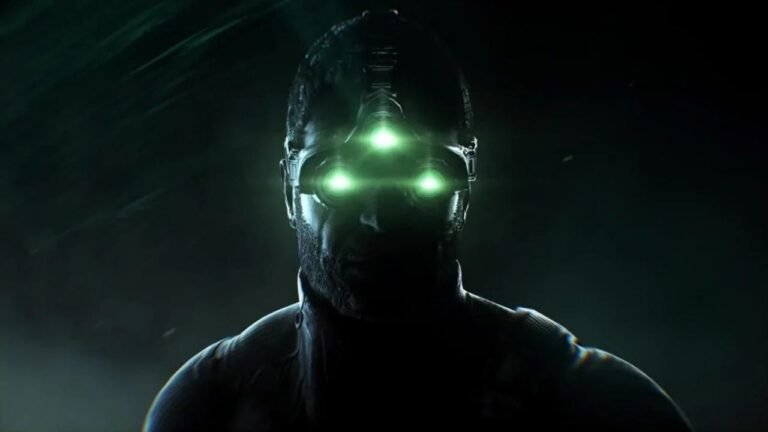
Speaking of Splinter Cell, it’s really hard to stay purely excited about the remake when you start hearing about the human cost behind the scenes. The news that Ubisoft laid off roughly 40 developers at the studio responsible for the remake was a total gut punch. Yes, the official line is that the game remains in active production and that the timeline hasn’t shifted, but let’s be real: you cannot lose 40 talented, experienced people and expect it not to impact the final product. This has become a recurring, heartbreaking theme in the mid-2020s. We see record-breaking franchise numbers and these incredibly ambitious pipelines, yet the people who are actually building these worlds find their positions more precarious than ever. It’s a disconnect that’s becoming impossible to ignore.
A 2024 study by Pew Research found that job security in the tech and gaming sectors has officially become the number one concern for workers, with the word “restructuring” often serving as a corporate euphemism for “we expect you to do more with less.” It’s a incredibly tough pill to swallow as a fan. We’re being promised these massive, genre-defining experiences like the return of Sam Fisher, but the foundation they’re being built on feels increasingly shaky and unstable. I want to see a modern Splinter Cell as much as the next guy—I’ve missed that tactical stealth gameplay for years—but not if it comes at the cost of the sanity and the livelihoods of the people who are pouring their lives into bringing him back to the screen. We have to start asking what the true price of our entertainment is.
From the Console to the Couch: Can Prestige TV Sustain the Far Cry Universe?
Finally, we have the Far Cry anthology series, and this is where the strategy gets genuinely interesting. Bringing names like Rob McElhenney and Noah Hawley into the fold is a massive get for Ubisoft. Hawley, in particular, has this incredible knack for taking established, sometimes dusty IP (look at what he did with Fargo or Alien Earth) and transforming it into something prestige, weird, and utterly compelling. If the Far Cry TV series follows that “prestige television” template, it could do for Ubisoft what The Last of Us or Fallout did for their respective franchises. It has the potential to bring in a whole new audience—people who couldn’t care less about “backpack mechanics” or “extraction zones” but absolutely love a well-written, charismatic villain and a beautiful setting.
Having McElhenney involved is also a great meta-touch, especially given his work on Mythic Quest, which poked such perfect fun at the industry itself. It feels like Ubisoft is trying to build a genuine transmedia empire that can sustain their brands even during the inevitable “down” years for the games. If the show is a hit, it won’t actually matter if Project Maverick feels a bit derivative; the brand awareness and cultural footprint will be massive. It’s a very smart, calculated move, but as always, it comes down to the execution. You can’t just throw famous names and a big budget at a screen and hope for a masterpiece—you only have to look at the dozens of failed adaptations from the early 2010s to see how easily this can go wrong. But with Hawley at the helm, I’m cautiously optimistic that we might actually get something special.
What is the “72-hour” mechanic in the new Far Cry?
Currently known by the codename Project Blackbird, the next major Far Cry game is reportedly moving away from the traditional “take your time” open-world structure. Instead, it features a non-linear story where the player is tasked with rescuing their kidnapped family members within a strict 72-hour in-game window. This works out to roughly 24 hours of real-time gameplay, intended to create a constant sense of pressure and urgency that the series has lacked in recent years.
Is the Splinter Cell remake still happening?
Yes, the project is still officially “go.” Despite Ubisoft recently laying off approximately 40 developers from the studio handling the remake, the company has issued statements confirming that the Splinter Cell remake remains in active production. However, many industry analysts and fans are concerned about how these staff reductions might affect the eventual scope of the game or the mental health of the remaining team members.
What was Assassin’s Creed Singularity?
Singularity was a project that never saw the light of day. It was designed as a virtual trading card game (TCG) set within the Assassin’s Creed universe, featuring controversial Web3 and blockchain elements like NFTs. Thankfully, it was scrapped during Ubisoft’s internal restructuring in 2025. The cancellation was widely seen as a positive sign that the company is moving away from speculative digital assets in favor of more traditional gaming experiences.
At the end of the day, it feels like Ubisoft is standing at a major crossroads. They clearly have the raw talent, they own some of the most beloved IPs in history, and their ambition is undeniable. But as they lean harder into this “creative house” model and double down on their biggest titans, I truly hope they don’t lose sight of what actually made these games special in the first place. It wasn’t the “solid pipeline” or the “30 million community members”—it was that specific, incomparable feeling of stepping into a world that felt dangerous, brand new, and completely alive. Let’s just hope that in their massive rush to give us more, they don’t forget to give us something better.
This article is sourced from various news outlets. Analysis and presentation represent our editorial perspective.
About the Author