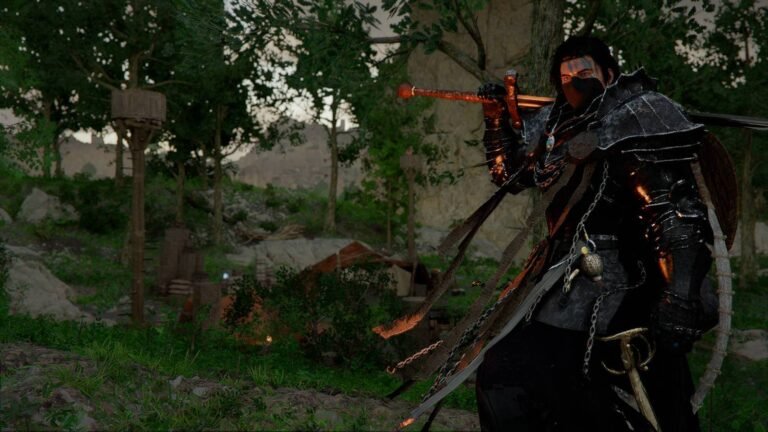
Let’s be honest for a second—we’ve been waiting for Crimson Desert for what feels like a literal lifetime. Ever since Pearl Abyss first pulled back the curtain nearly four years ago, the hype has been a total rollercoaster. One minute we’re collectively losing our minds over those jaw-dropping graphics, and the next, we’re all whispering, “Wait, is this game actually ever coming out, or is it just a tech demo?” Well, according to Gamebrott.com, that long-standing wait is finally transitioning into a concrete roadmap, but it comes with a bit of a catch—one that has the community buzzing with a mix of excitement and genuine skepticism.
The “Wait and See” Gamble: Why Pearl Abyss is Playing it Safe
The developer recently dropped their Q4 2025 financial report, and if you’re the type of person who tracks these things like a hawk, it’s a total goldmine of information. The big headline? Pearl Abyss is taking a very cautious “wait and see” approach when it comes to multiplayer. They’ve essentially told investors—and us—that if the game sells well and the market actually likes the world they’ve built, then, and only then, will they pull the trigger on a multiplayer mode or significant DLC. It’s a refreshingly honest stance, sure, but it’s also a little nerve-wracking. In an industry that usually spends years over-promising features only to under-deliver at launch, seeing a studio be this transparent about their hesitation is… well, it’s a lot to process.
I find this shift fascinating because it signals a massive change in how the studio views its flagship title. We have to remember that Crimson Desert wasn’t always meant to be this way. It was originally pitched as a straight-up MMO, the spiritual successor to the legendary Black Desert Online. Seeing them pivot so hard into a single-player-first experience—to the point where multiplayer is now a big “maybe” rather than a “definitely”—tells us everything we need to know about the current state of AAA gaming. Whether you’re playing on PC, PS5, or Xbox Series X/S, the landscape has changed, and Pearl Abyss knows it.
There’s a financial reality here that we can’t ignore, either. According to a 2024 Statista report, the average development cost for high-end AAA titles has ballooned past the $200 million mark. When you’re playing with that kind of money, you don’t just “hope” a complex multiplayer infrastructure works on day one; you ensure the core game can stand on its own two feet first. Pearl Abyss is playing the long game here, and honestly? I think it’s the right move. Why risk a disastrous server launch that taints the entire IP when you can deliver a polished solo adventure first? It’s about survival as much as it is about strategy.
Is Bigger Always Better? Breaking Down the Map of Pywel
One of the most eye-popping claims coming out of the studio recently involves the sheer scale of the world. We’re hearing that the land of Pywel is roughly twice the size of Skyrim and significantly larger than the sprawling vistas of Red Dead Redemption 2. Now, on paper, that sounds incredible. Who doesn’t want more room to explore, more mountains to climb, and more secrets to find? But as anyone who has suffered through a bloated, empty open-world game knows, size isn’t everything. It’s about the density of the experience. It’s about whether those miles of digital land actually contain something worth seeing.
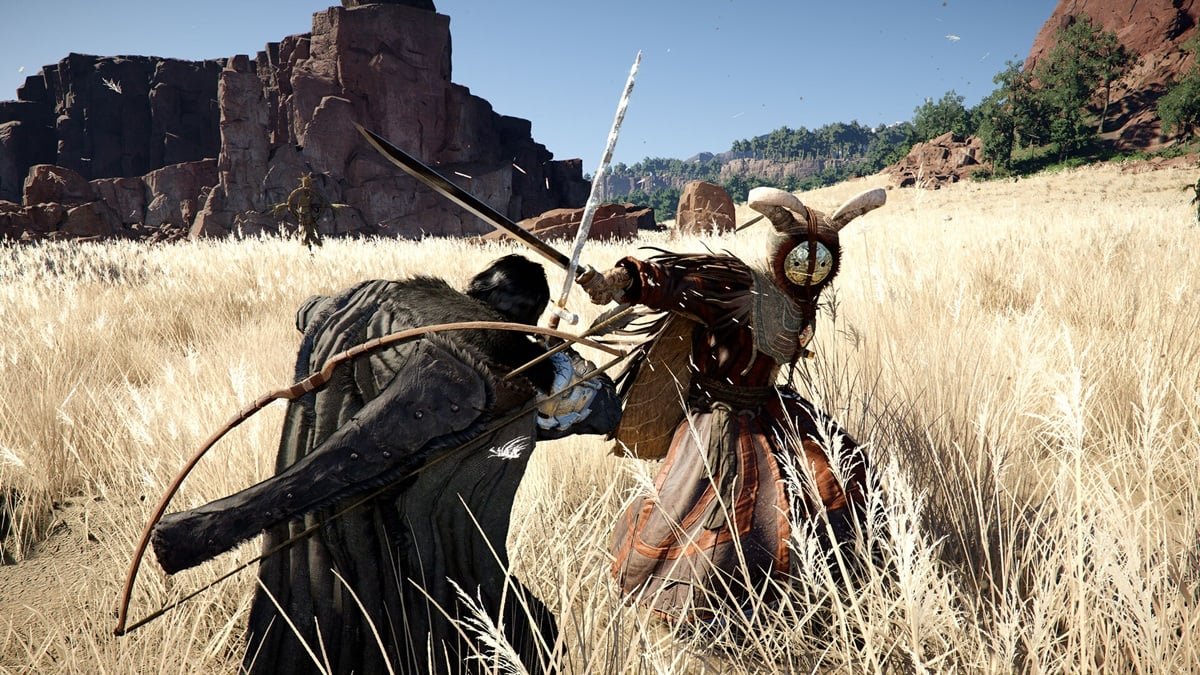
Pearl Abyss is promising “endless activities,” which is a pretty bold claim to make in 2024. In a world that large, you run the risk of having a “miles of string, inches of gold” problem—where everything is spread too thin to be meaningful. However, if they can translate the incredible combat fluidity they mastered in Black Desert Online into a deep, narrative-driven single-player campaign, the size of the map becomes a playground rather than a chore. They’ve already teased a combat system that allows for insane combos and creative weapon combinations, which suggests they want us to spend a lot of time fighting our way across those vast plains, rather than just fast-traveling over them.
“The scale of the world is a testament to our new engine, but the heart of the game remains the journey of the individual player.”
— Pearl Abyss Development Lead (translated from Q4 Report)
But let’s look at the actual data for a second, because the numbers tell a story the marketing teams sometimes miss. According to Newzoo’s 2025 Global Games Market Report, 47% of PC and console players still prioritize deep, immersive single-player narratives, despite the massive industry-wide push toward live services and “forever games.” People are hungry for stories. They want to feel like a hero in a world that actually reacts to their choices, not just another faceless player in a crowd of thousands standing around an MMO hub. By focusing on the single-player experience first, Pearl Abyss is tapping into a market that is increasingly tired of “always-online” requirements and the toxicity that can sometimes bleed into shared spaces. They’re giving us a world to get lost in, alone, and there’s something really appealing about that.
The BlackSpace Engine: A Double-Edged Sword
If you’re wondering why this game has taken so long to crawl out of the development oven, look no further than the BlackSpace Engine. Pearl Abyss didn’t just decide to build a massive game; they decided to build the proprietary tools to make that game at the exact same time. This is a notoriously difficult way to handle development. It’s like trying to build a high-performance car while you’re simultaneously inventing a brand-new type of internal combustion engine in the garage next door. It’s ambitious, yes, but it’s also why we’ve been waiting for years.
The Q4 report essentially admitted that this parallel development was the primary reason for the constant delays. But there’s a silver lining here that shouldn’t be overlooked. Now that the engine is finally “ready,” the studio believes they can fast-track their other high-profile projects, like the creature-collecting DokeV and the exo-suit shooter Plan 8. This is a massive win for the studio’s long-term health. They’ve essentially built a foundation that could power their entire ecosystem of games for the next decade. It’s a “pain now, gain later” scenario.
I’ve seen some fans worrying that the pivot away from a dedicated multiplayer launch means the game is somehow “smaller” than they expected. I’d actually argue the exact opposite. By stripping away the endless balance issues, the “netcode” nightmares, and the server-side headaches of an MMO, they’ve been able to push the visual fidelity and physics to a level that just wouldn’t be possible in a shared world. Have you seen the way the grass reacts to the wind, or those destructible environments in the recent trailers? That’s pure “new engine” energy right there. You can’t do that when you have to sync 500 players in the same zone.
The Multiplayer Carrot: Is it a Reward or a Missing Feature?
So, let’s talk about that multiplayer “plan” again. It’s essentially a carrot on a stick for the community. The message is basically: “Buy the game, help us make it a massive hit, and we’ll give you a way to play with your friends later.” It’s a bit of a mercenary approach, I’ll admit. But in an era where legendary studios are closing their doors and others are facing massive layoffs, being fiscally responsible is just smart business. They aren’t going to build a multiplayer infrastructure that nobody uses.
I suspect the “multiplayer” they’re talking about won’t look anything like a traditional MMO world. Instead, we’ll likely see something closer to a co-op mode or perhaps a series of shared instances. Think more Elden Ring or Monster Hunter and less World of Warcraft. And honestly? That’s what most of us actually want anyway. The ability to pull a friend into your world to help take down a massive, screen-filling boss is way more appealing to the modern gamer than grinding for 40 hours just to join a raid group. It’s about quality of interaction over quantity of players.
Will Crimson Desert be on Game Pass or PS Plus?
As of right now, there’s no official word on a Day One subscription launch. Pearl Abyss seems very focused on traditional sales figures to hit those “success targets” that will trigger the development of multiplayer and future DLC. They want to see the numbers before they commit to a subscription model.
Is the multiplayer going to be a separate download?
The developers have dropped hints that if it happens, it will likely be an expansion or a significant update (DLC) rather than a standalone game. This is great news because it ensures that your hard-earned single-player progress and gear will actually carry over into the shared experience, rather than making you start from scratch.
What’s Actually at Stake for Pearl Abyss?
At the end of the day, this isn’t just about one game. This is about Pearl Abyss proving they can compete with the absolute titans of Western and Japanese development. For years, they were known strictly as “the BDO company.” If Crimson Desert lands with the impact they’re hoping for, they suddenly become a Tier 1 global developer, right up there with the greats. It’s their “make or break” moment on the world stage.
But man, the pressure is on. When you tell the entire world that your map is twice the size of Skyrim, you’re inviting a very specific, very intense type of scrutiny. People won’t just be looking for pretty trees; they’ll be looking for that “Bethesda magic”—those unscripted, weird moments where you stumble upon a hidden cave or a bizarre NPC interaction that stays with you for years. If Pywel turns out to be just a beautiful but empty wasteland, all that engine work and all those years of development will have been for nothing. It has to feel alive.
And we can’t forget about DokeV. That game went absolutely viral a couple of years ago because of its incredible art style and those “Pokemon-on-steroids” vibes. If Crimson Desert succeeds, it clears the path and provides the funding for DokeV to get the resources it needs to be a global phenomenon. If it fails? Well, the “BlackSpace Engine” might just become a very expensive, very beautiful footnote in gaming history. There is a lot riding on this launch, and the stakes couldn’t be higher for the studio’s future.
Personally, I’m rooting for them. We’re in a bit of a creative drought lately, and we need more studios that are willing to build their own tech and take big, risky swings on new IPs. The “success-first” multiplayer strategy might feel a bit overly cautious to some, but in a world where games are often released half-baked and “fixed” via patches later, I’d much rather have a polished, single-player masterpiece right now and a fun multiplayer mode to look forward to a year down the road. It’s a gamble, sure, but it’s one that might just pay off for everyone involved.
This article is sourced from various news outlets. Analysis and presentation represent our editorial perspective.
About the Author