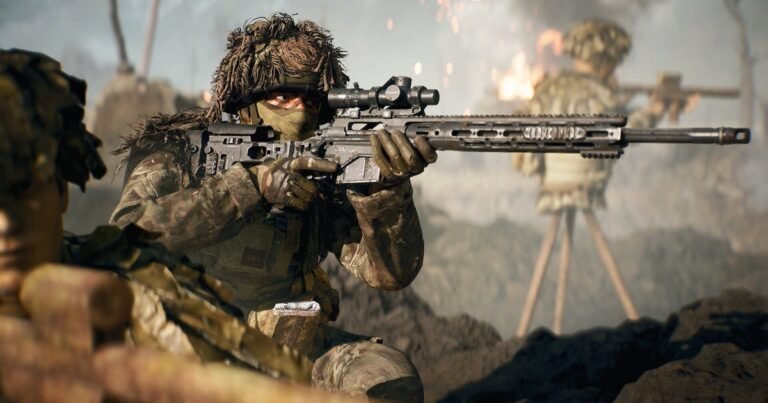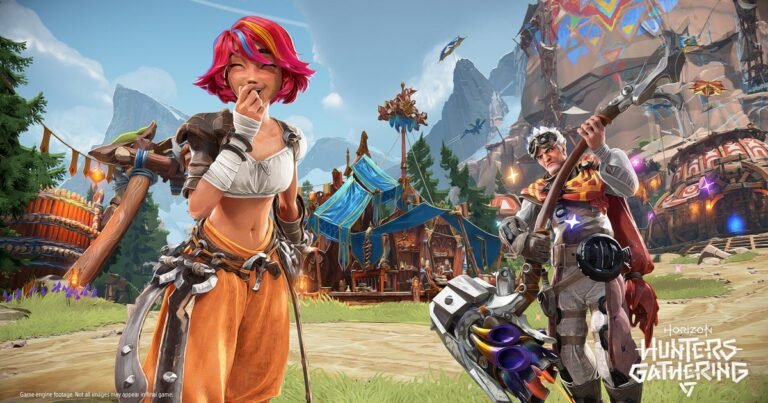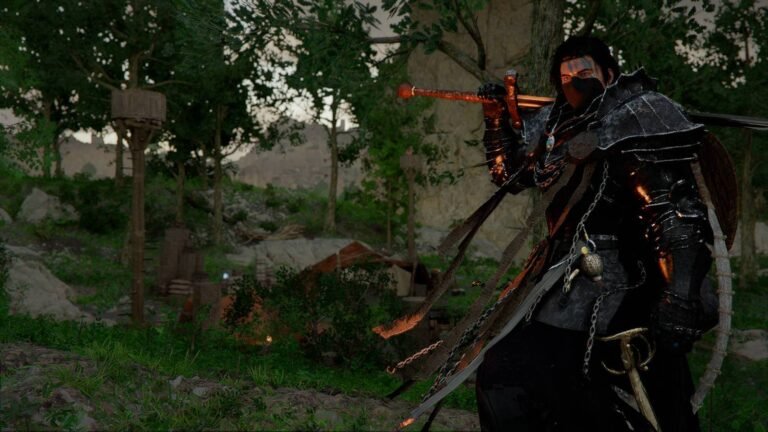
You load in. You grab a randomized weapon. You clear three rooms of increasingly hostile enemies, snag a shiny new perk, and then get absolutely obliterated by a boss you’ve never encountered before. And then? You immediately hit restart. It’s an intoxicating loop — the kind that bypasses rational thought entirely. According to DualShockers, this exact gameplay cycle is becoming the default blueprint for nearly every major publisher looking to extend the shelf life of their flagship titles. As of early 2026, we are deep in the era of the AAA roguelike, and honestly, it makes perfect sense.
For a long time, the post-launch roadmap for a massive blockbuster was entirely predictable. Finish the main story, wait six months, drop twenty bucks on a DLC that added maybe three hours of narrative. That model is dying. Too slow. Too expensive. And — in practice — far too risky for studios operating at this scale.
What they’ve discovered instead is that giving us the tools to torture ourselves in infinite, randomized arenas is not just genuinely fun — it’s shrewd business wrapped in a very appealing package.
How the roguelike killed the $20 story expansion
Look at the cold reality of modern game development. Building a sprawling, cinematic adventure for the PS5 or Xbox Series X costs an astronomical sum — budgets routinely push past the $200 million mark for single-player titles, per industry tracking from Newzoo. When a studio spends five years forging an intricate combat system, the last thing they want is for you to engage with it over a single 15-hour weekend binge and then shelve it permanently.
That pressure is precisely why PlayStation studios pivoted so hard into the roguelike space. When Santa Monica Studio dropped the Valhalla DLC for God of War Ragnarok, and Naughty Dog introduced No Return for The Last of Us Part II Remastered, they weren’t recycling leftover assets out of laziness. They were stress-testing their own combat mechanics — stripping away the slow walks, the emotional cutscenes, the narrative scaffolding — leaving only the raw, kinetic thrill of survival. When actually tested against traditional DLC formats, the difference in player engagement was stark.
Players responded. Ferociously. A global gaming market report by Newzoo found that games offering highly replayable, session-based modes see a 40% higher 90-day retention rate compared to strictly linear single-player titles. Give someone a reason to log in for just twenty minutes — one quick run, one more attempt at that second boss — and they never truly put the game down.
Balancing the meta without breaking the bank
There’s a distinct financial reality driving all of this. Creating entirely new continents, recording hours of fresh dialogue, animating new cutscenes — that’s a colossal financial gamble. Tweaking enemy spawn rates? Adjusting the damage output of a shotgun? That requires a fraction of the resources. The math isn’t subtle.
Not that building a genuinely good roguelike mode is cheap or effortless. It demands an almost agonizing level of balance. One heavy-handed nerf to a popular weapon, and the community revolts within hours. The “meta” — the community-agreed optimal way to play — shifts constantly, and developers have to chase it in real time, which is its own kind of relentless treadmill.
You can’t just slap permadeath on a linear game and call it a day. The core combat loop has to be absolutely flawless, or players will just bounce off after their second death. The friction has to feel fair.
— Jason Schreier, Gaming Journalist and Author
PC players are notoriously ruthless about this. Within days of a new roguelike DLC dropping, the PC community will datamine the patch notes, reverse-engineer exactly which combination of buffs yields the highest damage output, and break the game entirely. Here’s the thing, though — that’s kind of the beauty of it. A well-designed roguelike wants you to break it. It wants you to stumble into a god-tier build that dissolves the final boss in three seconds flat. Because for every run where you ascend to something close to an unstoppable deity, there are twenty runs where you die in the second room because RNG handed you a genuinely terrible loadout and offered no apology whatsoever.
The indie studios that handed the blueprint to the big players
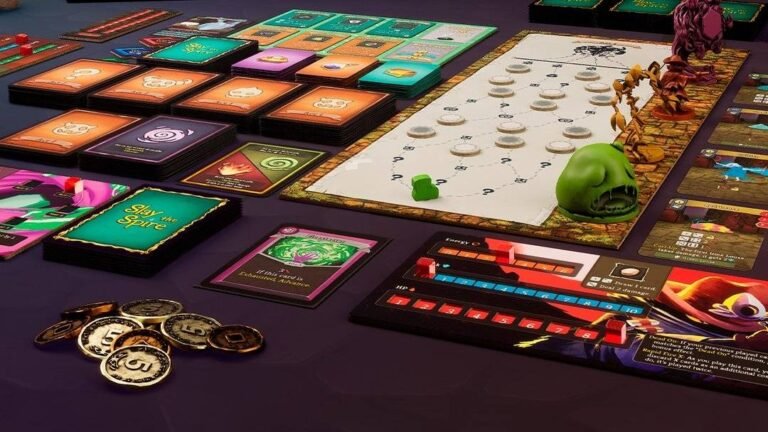
Impossible to discuss this shift without acknowledging the indie developers who laid the groundwork — years before Sony or Microsoft started caring about “runs” and “builds.” Smaller studios were quietly perfecting the formula while AAA publishers were still commissioning hundred-million-dollar cutscenes. Games like Dead Cells, Slay the Spire, and — obviously — Hades.
When Supergiant Games launched the full version of Hades II, it landed as a genuine cultural moment. Not just an indie darling climbing the charts — a mainstream titan that forced AAA publishers to sit down and take notes. Supergiant proved something that many larger studios had assumed was impossible: you can weave a compelling, emotionally resonant narrative into a game where the protagonist canonically dies every twenty minutes. The death loop, it turned out, could be the story.
Timing matters here, too. According to the Entertainment Software Association’s most recent demographic data, over 65% of adult players now explicitly seek out games that fit short, flexible play sessions. As lives get busier — commutes longer, schedules more fragmented — the prospect of committing to a 100-hour RPG becomes genuinely daunting. A 30-minute roguelike run on the Switch during a train ride? That slots in effortlessly. The format isn’t just mechanically appealing; it’s structurally compatible with how most adults actually live.
When “forever games” start feeling like homework
So here we are in early 2026, and almost every major action game seems to have a randomized survival mode bolted onto it. Even franchises historically rigid in their structure are experimenting with RNG loot drops and permadeath mechanics — some elegantly, others with the grace of a studio clearly following a trend memo rather than a genuine design instinct.
Fatigue is a real risk. When every game demands to be your “forever game,” the sheer volume of choices becomes exhausting. If you’re already deep in the parry timings of a grueling souls-like run, do you genuinely have the mental bandwidth to memorize item synergies in a completely different sci-fi shooter’s roguelike mode? Probably not. But developers are going to keep trying regardless, because the engagement metrics make the business case almost impossible to argue against.
What these modes do well — and this is worth sitting with — is that they respect the player’s mechanical skill in a way traditional campaigns rarely bother to. Story modes want you to win. They provide checkpoints, health packs, dynamic difficulty adjustments, all quietly conspiring to ensure you see the credits roll. A roguelike mode has no such interest in your feelings. It sets the rules, drops you in the arena, and offers one instruction: figure it out. No hand-holding. No safety net. Just the loop.
Why do developers prefer releasing roguelike DLCs instead of story expansions?
Cost and retention, in roughly equal measure. Developing new story content requires expensive voice acting, motion capture, and original level design. Roguelike modes repurpose existing assets into randomized encounters, offering hundreds of hours of replayability for a fraction of the development cost — and, crucially, keeping players engaged far longer than a narrative expansion that most players burn through in a single weekend.
Do these modes actually sell well?
Yes, especially when integrated into established franchises. Players who’ve already internalized a game’s combat system are typically eager for a reason to keep playing without retreading the same story missions. Beyond direct sales, these modes drive heavy engagement on streaming platforms like Twitch, effectively functioning as sustained, free marketing — a fact that publishers are very much aware of.
The hands-on reality is that the best roguelike modes don’t feel like bonus content. They feel like the truest expression of what a game’s combat was always capable of — unfettered, unscripted, and occasionally humbling in ways a scripted campaign never allows itself to be. That’s the pull. That’s what keeps the loop spinning.
This design philosophy will almost certainly bleed further into baseline game architecture — not just post-launch DLC, but the foundational structure of titles built from the ground up with randomized systems at their core. Publishers love the engagement metrics. Players love the endless challenge. And as long as the combat fundamentals are genuinely solid, the loop will keep running.
You die. You learn. You try again. Oldest rule in gaming — just repackaged for modern hardware, modern schedules, and modern attention spans that studios are, in their own way, desperately fighting to hold.
Source material compiled from several news agencies. Views expressed reflect our editorial analysis.
About the Author