Most murder mysteries in video games are fixated on the moment of the kill. You get dropped into a room, there is a chalk outline on the floor, and typically a suspiciously glowing trail of breadcrumbs leading straight to the culprit. Loud. Dramatic. And, honestly? Increasingly stale. According to Rock Paper Shotgun, a PC indie title from Owlskip Games is carving out a sharply different path — one that essentially casts you as a 1970s clerical worker with a mandate to hunt monsters.
The Quiet Thrill of Administrative Justice
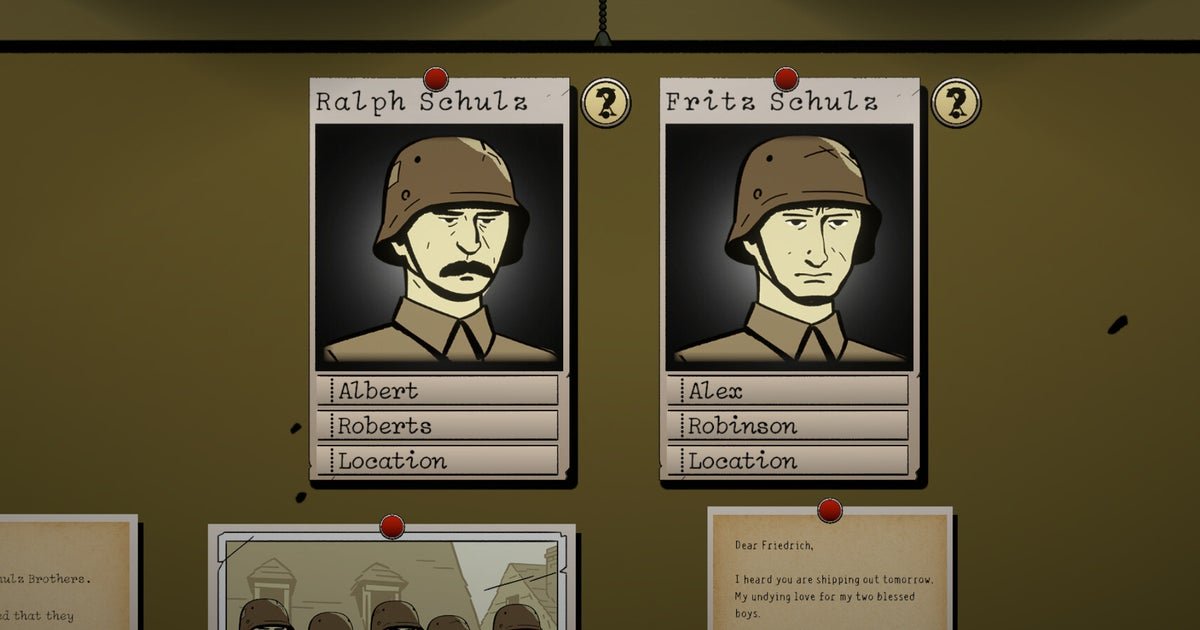
The game is called The Ratline. It landed on Steam back in March and has been — without much fanfare — quietly redefining what a detective game is allowed to be. You are not a superhero cop with x-ray vision and a bottomless supply of witty one-liners. Just a person in a room, listening to rain tap against a window, sorting through the day’s post. A note slides through your door, wedged between takeaway menus. A priest has been murdered. Tucked alongside the bad news: a list of Nazis he smuggled out of Germany after the war. Your job is to find them. Not by kicking down doors, but by matching aliases to blurry wedding photographs and cross-referencing dentistry records in Canada with café owners in London.
Brilliant. And it confirms a suspicion I’ve nursed for a while now: the most gripping mysteries do not detonate at the barrel of a smoking gun. They unravel in the margins of history, in handwriting on the backs of envelopes.
When You Ditch the Gun, You’re Left With the Brain
Strip away the combat, the chase sequences, the slow-motion takedowns — and what remains? Deduction. Pure, uncut analytical effort. This is precisely where The Ratline plants its flag. Each case deposits ex-Nazi names onto your investigation board. You must untangle their current pseudonym, pinpoint their hiding place, and piece together what they look like three decades on from the war crimes they committed.
Is the man with the dodgy hairline running a bakery in Argentina? You have to do the reading to find out. The game leans deliberately into the historical realities of post-war escape routes, anchoring its mechanics in a deeply unsettling reality: you are hunting ghosts who have successfully dissolved into ordinary society. That requires a specific, almost meditative patience — which, in practice, turns out to be far more nerve-shredding than any firefight.
Per a 2024 report by the Entertainment Software Association, puzzle and deduction games have climbed steadily through the ranks of player preference, with over 35% of adult PC players listing them as a top genre. People want to think. We are worn down by twitch-reflex shooters and the Sisyphean grind of loot systems. What we actually want — as of early 2025, at least — is to sit in a virtual chair, pull up a chunky rotary phone interface, and punch a number into the dial that we just excavated from a dusty Rolodex.
“The satisfaction of a hard-earned deduction is unlike any other dopamine hit in gaming. You aren’t just beating a level; you are outsmarting the designer.”
— Industry sentiment on the rise of the deduction genre
Lucas Pope Started Something He May Not Be Able to Stop
There is no honest way to discuss this subgenre without discussing Return of the Obra Dinn. Lucas Pope’s masterwork blew the doors clean off the investigation genre by flatly refusing to hold the player’s hand — no highlighted clues, no GPS waypoints, no condescending tutorial pop-ups whispering the answer. The Ratline carries a great deal of that DNA. Pope himself is quoted on the game’s Steam page, which says something.
There seems to be a loose, unofficial fellowship of developers quietly assembling these intense, logic-driven puzzle boxes. Tim Sheinman, the designer behind The Ratline, clearly understands the brief. The aesthetic is exactly right. You can crack open a window to admit the sound of rain — ceaseless, gentle, perfectly calibrated — while smooth jazz drifts in from somewhere just off-screen. Every mandatory noir trope lands without tipping into parody. That is a harder balance to strike than it looks.
The real sleight of hand, though, is in the mechanics. You are thrown entirely onto your own analytical resources. The game will not underline the crucial sentence in a letter for you. You must read the letter — the whole letter — realize that a passing mention of a particular pastry implies a geographic origin, and then tether that observation to a train ticket stub you nearly discarded twenty minutes ago. When it clicks? Exhilarating is the only word for it.
Eight Pins. That’s All You Get. Make Them Count.
Worth discussing: the UI. Nothing capsizes a paperwork simulator faster than bad paperwork, and in practice, Owlskip Games largely nailed it. The phone interface alone is a short course in tactile game design. Those big, clunky buttons — the satisfying resistance of each click — feel genuinely physical in a way that most digital interfaces forget to be.
There is, however, a catch.
In longer cases, you can only pin eight pieces of evidence to your investigation board at once. When I first hit that wall, it drove me up the ceiling. Eight? Why eight? I wanted the full conspiracy-theorist experience — a chaotic web of red string, photographs overlapping photographs, seventeen sticky notes in four different colors. Because of the cap, you are forced to constantly cycle items in and out of your inventory, perpetually nagged by the fear that some critical detail is sitting unseen in your pocket while you stare blankly at the board, unable to forge a connection that should be obvious.
Some critics have called this a design flaw — a budget constraint masquerading as a feature. I’d push back on that. Hard. The limitation manufactures friction, and friction is where the gameplay actually lives. By forcing you to choose which eight items earn a spot on the board, the game compels you to rank your own thinking. You cannot scatter everything at the wall and wait for something to adhere. You must curate your investigation, triage your leads, commit to a theory. Bold choice. Frankly, a brave one.
Before the Internet, Every Answer Cost You Something
The 1970s is the ideal era for this brand of analog detective work — and not merely for atmospheric reasons. No smartphones. No searchable databases. No algorithmic shortcut that surfaces the answer before you have even finished formulating the question. If you want to find someone, you crack open a directory, you make phone calls, you wait. The friction of period-appropriate tools makes the act of uncovering a complex, Obra Dinn-style mystery feel earned rather than delivered.
There is also a profound moral gravity specific to the decade. By the 1970s, many of these real-life figures were aging — slipping quietly into their twilight years, surrounded by neighbors who had absolutely no idea who they had been. The contrast between a mundane, rain-soaked Tuesday at the office and the terrifying reality of who you are actually pursuing generates an atmospheric tension that most triple-A titles spend tens of millions of dollars trying and failing to manufacture.
You are not rescuing the world from some looming apocalypse. You are just refusing to let the past buy itself a comfortable retirement.
Frequently Asked Questions
Is The Ratline available on consoles like the PS5 or Switch?
Currently, the game is a PC-centric experience on Steam. The heavy reliance on point-and-click document sorting makes it a natural fit for mouse and keyboard — though the indie space frequently sees console ports materialize later, so that calculus may shift.
Do I need to be a history buff to play this?
Not at all. While the backdrop involves post-war history and ex-Nazis, the actual gameplay turns on logic, reading comprehension, and pattern recognition rather than any prior historical knowledge. The game teaches you everything you need, in the way that good games do: by making you figure it out.
The Desk, the Corkboard, and the Genre That Refuses to Stay Niche
Something is happening in games right now — a quiet recalibration toward titles that treat the player as a capable adult. Games that hand you a sprawling pile of messy, contradictory data and say, without ceremony: figure it out.
The Ratline is proof that you do not need a blockbuster budget or photorealistic rendering to manufacture genuine immersion. What you need — and this is non-negotiable — is a compelling mystery, a well-conceived corkboard, and the nerve to let your player sit in confusion for a while without blinking. The payoff of finally pinning the right name to the right face, after an hour of dead ends and discarded theories and one embarrassingly wrong accusation, is the kind of satisfaction that lingers well after you close the game.
Just one more thing — and this is practical advice, not a gimmick: grab a physical notepad before you launch it. A real one, with actual paper. You will fill more of it than you expect.
This article is sourced from various news outlets. Analysis and presentation represent our editorial perspective.
About the Author