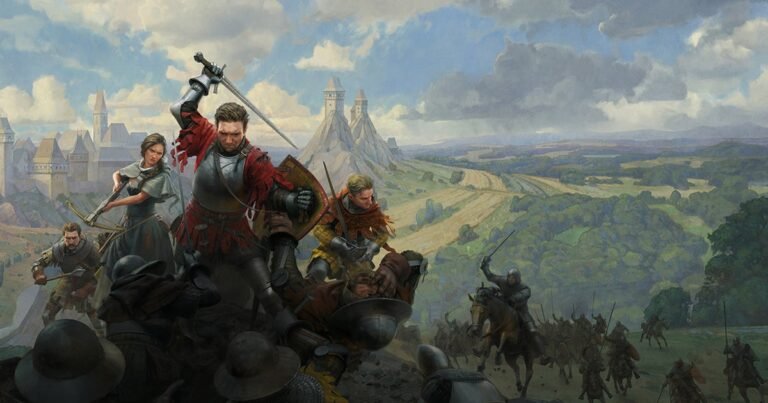
Let’s be honest for a second—there is just something about that classic, unmistakable Bethesda “jank” that feels like a warm blanket, isn’t there? You know exactly what I’m talking about. It’s that moment a guard in Whiterun decides to walk straight into a stone wall for three minutes, or when a Deathclaw in the Mojave Wasteland suddenly develops a passion for aeronautics and launches itself into the stratosphere. For years, we’ve been the ones screaming for these worlds to be rebuilt from the ground up. We’ve been begging for the Resident Evil 4 treatment for our favorite RPGs, dreaming of what Morrowind would look like in a modern engine. But Todd Howard—the man who has spent the better part of three decades steering the massive ships that are The Elder Scrolls and Fallout—isn’t taking the bait. And you know what? After watching how the industry has shifted over the last few years, I think he might actually be right.
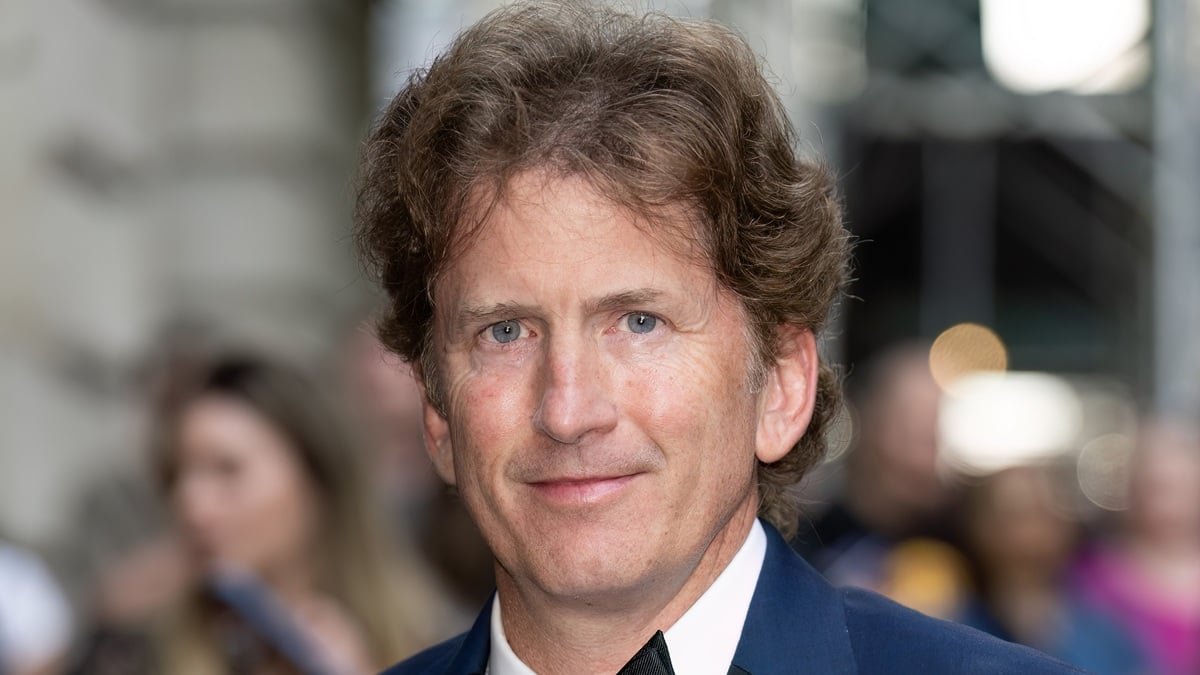
According to the folks over at Gamebrott.com, Todd Howard recently sat down for a pretty candid chat with the crew at Kinda Funny, and he didn’t hold back when it came to his stance on the whole “Remake vs. Remaster” debate. Now, Todd is 55, which means he’s seen this industry grow from simple pixels and sprites to the photorealistic, ray-traced behemoths we play today. Despite all that progress, he remains a bit of a traditionalist when it comes to the “soul” of a game. He’s definitely softened his stance on remasters lately—we’ve seen that with the recent Oblivion and Skyrim updates—but a full-blown remake? That’s still a bridge too far for him. To Todd, a game’s age isn’t some bug or a flaw that needs a patch; it’s a core part of its DNA.
Preserving the Soul: Why Every Game is a Snapshot of Its Own Era
Todd’s core argument is actually pretty simple, but it’s surprisingly deep when you stop to chew on it. He views a game as a product of its specific time, and he thinks that’s a feature, not a bug. When you fire up Fallout 3 on your PC or your Xbox today, you aren’t just playing a post-apocalyptic RPG; you’re effectively stepping into a time machine back to 2008. The slightly muddy textures, the clunky user interface, the way the characters move with that distinct stiffness—it all carries the “flavor” of that specific era of gaming. Howard’s fear is that if you strip all of that away and replace it with modern mechanics and a shiny, sterile new engine, you lose the “meaning” it had when it first hit the shelves. It’s a lot like colorizing a classic black-and-white film. Sure, it might look “better” to a modern audience who can’t stand grayscale, but did you accidentally kill the director’s original intent in the process? I’d argue you probably did.
This isn’t just a veteran developer being stubborn or stuck in his ways, either. It’s an editorial stance on the importance of preservation. In an industry where “New” is almost always equated with “Better,” Todd is out here making a case for the beauty of the “Old.” He mentioned to Kinda Funny that while he totally respects what other studios are doing with their high-budget remakes, for his own “babies,” he’d much rather just polish the glass than replace the entire window. It’s a sentiment that really resonates with a certain type of gamer—the kind who actually misses the specific, heavy weight of a 2011 Skyrim sword swing, even if it feels a bit “clunky” when you compare it to a 2024 soulslike. There’s a rhythm to those old games that a remake might accidentally overwrite.
“I’ve come around more on the remaster side of things. But for remakes, I still struggle. I respect them, but for me, a game’s age is part of its identity, including the ‘feel’ of the time and the meaning it had when it was first released.”
— Todd Howard via Kinda Funny
It turns out that Todd isn’t alone in this “purist” camp. A 2024 report by the Entertainment Software Association (ESA) found that nearly 60% of players actually believe that preserving the original gameplay “feel” is way more important than updating the graphics in a re-release. That’s a huge number. It suggests that Todd’s approach isn’t just some niche developer quirk; it’s actually perfectly aligned with what a massive chunk of the player base really wants. We want our memories to look a bit sharper, sure, but we don’t want them to be rewritten or “fixed” until they’re unrecognizable. We like the warts. They remind us of where we were when we first played.
The Oblivion Experiment: Proof That We Don’t Actually Want Everything Rebuilt
The best part about this philosophy is that we don’t have to guess if it works—we’ve already seen it in action. The launch of The Elder Scrolls IV: Oblivion Remastered last year was a massive proof of concept for Todd’s “polish, don’t rebuild” strategy. It was a gold mine. They didn’t try to turn Oblivion into Starfield or Skyrim 2. They kept those slightly goofy, doughy character faces—bless their hearts—and they kept the iconic physics that make the world feel so reactive. But they also brought the resolution up to a crisp 4K on the PS5 and Xbox Series X, smoothed out the frame rates so it plays like butter, and finally squashed some of those egregious bugs that had been hanging around for twenty years. It felt like playing Oblivion for the first time all over again, rather than playing a modern game pretending to be Oblivion. There’s a huge difference there.
The runaway success of that project has clearly given Bethesda a lot of confidence. It proved that the “Bethesda magic” isn’t about having the highest-fidelity facial animations or seamless transitions from a planet’s surface into deep space. It’s about that very specific loop of exploration and discovery that they absolutely perfected in the mid-2000s. And let’s be real for a second: after the somewhat lukewarm, divided reception to Starfield—which a lot of fans felt drifted a bit too far away from that classic Bethesda DNA—the studio really needed a win. They needed something to remind everyone why they fell in love with these worlds in the first place, and Oblivion was exactly that.
There’s also a very practical, business-minded side to this. According to Statista data from late 2024, remasters often see a much higher return on investment relative to their development costs when you compare them to full-scale, ground-up remakes. By focusing on visual “up-rezzing” and technical stability rather than re-recording every single line of dialogue and rebuilding every asset from scratch, Bethesda can keep their main heavy-hitter teams focused on the “next big thing” (hello, Elder Scrolls VI) while still giving the fans something to satisfy that nostalgia itch. It’s a pragmatic move as much as it is an artistic one, and honestly, it’s hard to argue with the logic.
The Radioactive Elephant in the Room: Navigating the Fallout Fever
Of course, we can’t talk about Bethesda without talking about the radioactive elephant in the room: Fallout. Ever since the Amazon Prime series basically blew the doors off the franchise in 2024, the demand for “Modern Fallout” has been absolutely through the roof. It’s been wild to watch. Circana (you might remember them as NPD) reported that the Fallout franchise saw a staggering 200% spike in active players right after the show’s debut. Fallout 4 and New Vegas have been dominating the charts like they just came out yesterday. Naturally, fans have been screaming at the top of their lungs for a Fallout 3 or New Vegas remake.
But if we’re actually listening to what Todd is saying, those “Remakes” we’re all hoping for are almost certainly going to be “Remasters.” And you know what? That might actually be for the best. Can you even imagine a version of New Vegas without its specific, slightly janky charm? If you try to make it look and feel like a modern, hyper-polished AAA shooter, you run the risk of losing the very thing that made it a cult classic to begin with. Howard has hinted that there are multiple Fallout projects currently in the works, and while he hasn’t explicitly confirmed the Fallout 3 and New Vegas updates yet, all the breadcrumbs lead straight back to the same treatment Oblivion received. And I’m okay with that.
This approach also does something really important: it protects the legacy of the original developers. New Vegas, as we all know, was famously developed by Obsidian Entertainment, and it has a very specific, sharp, and cynical voice. If Bethesda were to “Remake” it in-house, would they really be able to capture that same lightning in a bottle? Or would they accidentally “Bethesda-fy” an Obsidian masterpiece? By sticking to a remaster, they preserve the original work of those writers and designers while making it playable for a whole new generation of kids who weren’t even born when the bombs first dropped in the Mojave. It respects the history of the medium.
A Map Back to Tamriel: What Todd’s Stance Tells Us About the Next Elder Scrolls
Perhaps the most exciting thing to take away from Todd’s recent comments isn’t about the past at all—it’s about what this means for The Elder Scrolls VI. He mentioned that the next installment is looking to “return to the roots” of the series. To me, that sounds like a very direct, very honest response to the feedback they got from Starfield. While Starfield was technically impressive in its scale, it lacked that sense of a singular, hand-crafted, dense world that you could get lost in for hundreds of hours without ever seeing a loading screen. It felt a little bit… sterile. A little bit spread too thin.
By looking back at what made Morrowind, Oblivion, and Skyrim work so well, Bethesda seems to be recalibrating their compass. They’re realizing that they don’t necessarily need a thousand planets to explore; they just need one single province that feels alive, reactive, and full of secrets. They’re leaning into the “flavor” of their past to build their future. It’s a refreshing bit of self-awareness from a studio that has sometimes been accused of losing its way in the pursuit of sheer scale. It makes me a lot more optimistic about the next trip to Tamriel.
Is a Fallout 3 Remake coming out soon?
While the rumors are definitely swirling, it is much more likely that we will see a “Remaster” rather than a full, ground-up “Remake.” Todd Howard’s recent comments strongly suggest that Bethesda prefers polishing their existing games over rebuilding them from scratch. Don’t go expecting a release in the immediate future, though, as several of these projects are still in the very early stages of development.
Why does Todd Howard prefer Remasters over Remakes?
It really comes down to identity. Howard believes that a game’s original mechanics and that specific “feel” of its era are essential to what it is. He views the age of a game as a “time capsule” that should be preserved and celebrated, not erased or overwritten by modern updates that might change the core experience.
Final Thoughts: Embracing the Imperfect
At the end of the day, I think Todd Howard is out here defending the idea that video games are art—and art shouldn’t always be “fixed.” We don’t go and paint over the Mona Lisa just because her smile is a little blurry by the standards of modern high-resolution photography. We don’t “remake” classic films with better CGI just because we can. We preserve the canvas. By choosing remasters over remakes, Bethesda is making a conscious choice to preserve the history of the gaming medium, warts and all. And those warts are important.
It’s a pretty bold stance to take in a market that is absolutely obsessed with the “Next Gen” label and pushing for higher and higher fidelity at all costs. But as we’ve seen with the massive resurgence of retro-gaming and the huge success of the Oblivion touch-up, there is a massive appetite out there for authenticity. We don’t need every single game to look like a blockbuster movie. Sometimes, we just want to wander through a forest in Cyrodiil, listen to Jeremy Soule’s iconic, sweeping score, and have a good laugh when a deer randomly clips through a rock. Because that’s not a bug—it’s Bethesda. And honestly? I wouldn’t have it any other way.
This article is sourced from various news outlets. Analysis and presentation represent our editorial perspective.
About the Author